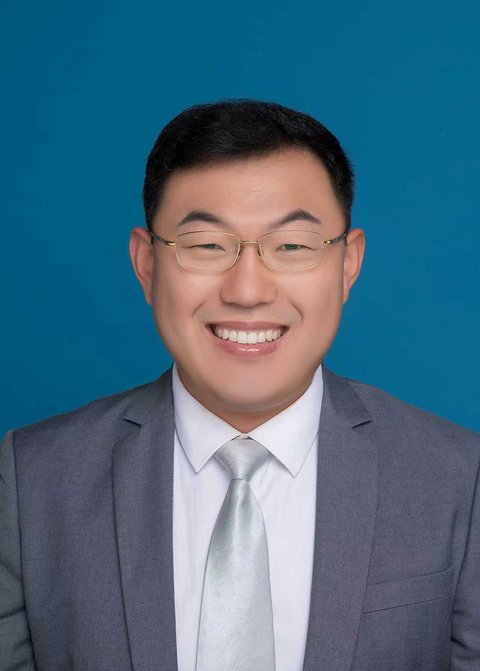
个人简介Biography
教授,博士生导师。2016 年于中国科学院获博士学位,先后于德国马普高分子研究所进行博士联培、博士后研究,并担任课题组长。2021 年加入中国海洋大学医药学院,从事纳米药物递送系统与纳米-生物界面作用的研究工作。
主持国家自然科学基金青年基金、山东省优秀青年基金(海外)、山东省"泰山学者"青年专家等项目,担任海大-逢时海洋磷脂研究中心主任。发表论文 80 余篇,其中以第一或通讯作者在 Chem. Soc. Rev.、Acc. Chem. Res.、Sci. Adv.、Sci. Bull.、Angew. Chem.(7)、Adv. Mater.、Adv. Funct. Mater.、Adv. Sci.(2)、ACS Nano(2)、Nano Lett.(3)、JCR(2)等期刊发表论文 50 余篇,引用 3000 余次。
Prof. Shuai Jiang received his Ph.D. from the University of Chinese Academy of Sciences in 2016. He then joined the Max Planck Institute for Polymer Research (Germany) for joint Ph.D. training and postdoctoral research, where he later led a research group. In May 2021, he joined the School of Medicine and Pharmacy at Ocean University of China as a Full Professor. His research focuses on nanomedicine delivery systems and nano-bio interface interactions.
He has published over 80 papers, including more than 50 first/corresponding-author papers in journals such as Chem. Soc. Rev., Acc. Chem. Res., Sci. Adv., Sci. Bull., Angew. Chem. (7), Adv. Mater., Adv. Funct. Mater., Adv. Sci. (2), ACS Nano (2), Nano Lett. (3), and JCR (2), with over 3,000 citations.
研究方向Research Interests
研究进展Research Overview
纳米药物靶向递释系统是一种极具开发潜力的药物递送策略,其通过改变药物的代谢动力学和组织分布,提高对肿瘤组织的特异性作用并同时降低药物对正常组织的毒性,在肿瘤治疗等领域得到了广泛的重视和发展。
针对现阶段抗肿瘤纳米药物临床转化率低的瓶颈问题,本课题组从高效、智能药物递送纳米载体和纳米反应器的开发,以及纳米-血液蛋白相互作用两方面开展研究。基于胶体化学和界面聚合,开发了纳米乳液原位包覆技术,针对特定药物的具体性质(如亲疏水性、生物活性、分子尺寸、释药需求等),发展出一系列特异性纳米胶囊药物递释载体和酶级联纳米反应器;结合材料表面修饰与表征、蛋白质组学和细胞、动物实验,建立了纳米材料-血液蛋白相互作用的研究方法学,揭示了纳米药物与血液蛋白吸附行为的作用机制、生物效应及调控方法,为全面、深入认识纳米药物的体内命运、推动抗肿瘤纳米药物的临床转化提供了重要研究基础。
Targeted nanomedicine delivery systems represent a highly promising strategy: by altering pharmacokinetics and tissue distribution, they enhance tumor-specific efficacy while reducing toxicity to healthy tissues, and have attracted broad attention in cancer therapy.
To address the low clinical translation rate of current anti-tumor nanomedicines, our group focuses on two directions: (1) developing efficient and intelligent nanocarriers and nanoreactors for drug delivery; and (2) elucidating nano-blood protein interactions. Based on colloid chemistry and interfacial polymerization, we developed an in-situ nanoemulsion coating technique and created a series of specific nanocapsule delivery vehicles and enzyme cascade nanoreactors tailored to drug properties (hydrophilicity/lipophilicity, bioactivity, molecular size, release requirements). Combining surface modification and characterization, proteomics, and cellular/animal studies, we established methodologies for studying nano-material/blood protein interactions, revealing the mechanisms, biological effects, and regulation of protein adsorption onto nanomedicines — providing an important foundation for understanding the in vivo fate of nanomedicines and advancing their clinical translation.
教育与工作经历Education & Experience
教育背景Education
工作经历Work Experience
代表性论文Selected Publications
(* 通讯作者;+ 共同一作,完整论文列表见 Google Scholar) (* corresponding author; + co-first author. Full list on Google Scholar)
- S. Jiang, J.F. Zhang,* et al. Nano-bio interactions in nanomedicine: protein corona-mediated immune clearance and surface engineering strategies. Sci. Bull. 2026, doi: 10.1016/j.scib.2026.08.062.
- Y. Yu, + S. Jiang,* et al. Incorporation of Novel Synthetic Glycolipids in Liposomal Nanoparticles Affects Opsonization and In Vivo Clearance. Angew. Chem. 2026, 138, e20837.
- F. Fu, S. Jiang,* et al. Cholesterol-Mediated Protein Corona Controls In Vivo Clearance and Selective Organ Distribution of Liposomes. ACS Nano 2026, 20, 23345.
- X. Li, + S. Jiang,* et al. Engineering Morphological Anisotropy to Control the In Vivo Transport Dynamics, Clearance, and Biodistribution of Silica Nanocarriers. Adv. Sci. 2026, e77000.
- J. Ding, + S. Jiang,* et al. Serum Lipids Remodel the Biomolecular Corona to Direct Nanoparticle Biodistribution. Nano Lett. 2026, doi: 10.1021/acs.nanolett.6c01852.
- W. Yang, + S. Jiang,* et al. Beyond the liver and deeper in the liver: Sub-organ level analysis of in vivo sequestration mechanism of silica nanocapsules. J. Control. Release 2026, 395, 114948.
- T. He, + S. Jiang,* et al. Macrophage Phenotype-Dependent Protein Corona Formation Governs Ligand Accessibility and Immune Clearance of Biomimetic Nanoparticles. Small 2026, 22, e14389.
- T. He, S. Jiang,* et al. Protein Corona Reprograms Hepatic Clearance Pathways of Biomimetic Nanoparticles via Ligand Masking and Differential Protein Enrichment. Small 2026, 22, e73301.
- Q. Wang, + S. Jiang,* et al. Chitosan thermosensitive hydrogel-based sustained-release system of Netrin-1 overexpressing macrophage exosomes: synergistic enhancement of angiogenesis and nerve regeneration. NPG Asia Mater. 2026, 18, 25.
- W. Han, + S. Jiang,* et al. Pathophysiological Protein Corona Governs the Biological Fate of Nanoparticles. ACS Appl. Mater. Interfaces 2026, 18, 21500.
- T. He, S. Jiang,* et al. Single-Particle Analysis Reveals Heterogeneity in Membrane Coating. Small Methods 2026, 10, e02352.
- Z. Wang, S. Jiang,* et al. Integrating Incompatible Tandem Photobiocatalysis in Artificial Cells Enables Metabolic Modulation of Natural Cells. Sci. Adv. 2025, 11, eadu4828.
- W. Han, S. Jiang,* et al. Self-Sustained Biophotocatalytic Nano-Organelle Reactors with Programmable DNA Switches for Combating Tumor Metastasis. Adv. Mater. 2025, 37, 2415030.
- F. Fu, + S. Jiang,* et al. Engineering Artificial Mitochondria with Self-Amplifying Proton Generation for Autonomous Energy Supply and Metabolic Coupling in Artificial Cells. Angew. Chem. 2025, e202514980.
- Y. Ge, + S. Jiang,* et al. Physiological pH Transition-Driven Protein Corona Dynamics Regulate Cellular Uptake and Inflammatory Responses of Silica Nanoparticles. Adv. Sci. 2025, e02788.
- Y. Qiu, S. Jiang,* et al. The Distribution of Complement Proteins in Soft and Hard Coronas Impacts Macrophage Uptake of Nanoparticles. Adv. Healthc. Mater. 2025, 15, e03534.
- F. Fu, S. Jiang,* et al. In situ characterization techniques of protein corona around nanomaterials. Chem. Soc. Rev. 2024, 53, 10827.
- Y. Niu, S. Jiang,* et al. In Situ Measurement of Nanoparticle–Blood Protein Adsorption and Its Heterogeneity with Single-Nanoparticle Resolution via Dual Fluorescence Quantification. Nano Lett. 2024, 24, 9202.
- R. Wang, S. Jiang,* et al. Liposomal Enzyme Nanoreactors based on Nanoconfinement for Efficient Anti-Tumor Therapy. Angew. Chem. 2023, 62, e202308761.
- J. Gonçalves, S. Jiang,* et al. Confining the Sol-Gel Reaction at the Water/Oil Interface: Creating Compartmentalized Enzymatic Nano-Organelles for Artificial Cells. Angew. Chem. 2023, 62, e202216966.
- M. Prawatborisut, S. Jiang,* et al. Modulating Protein Corona and Materials-Cell Interactions with Temperature Responsive Materials. Adv. Funct. Mater. 2022, 32, 2106353.
- S. Jiang, K. Landfester,* et al. Synthetic Silica Nano-Organelles for Regulation of Cascade Reactions in Multi-Compartmentalized Systems. Angew. Chem. 2021, 133, 2.
- M. Li, S. Jiang,* et al. Brush Conformation of Polyethylene Glycol Determines the Stealth Effect of Nanocarriers in the Low Protein Adsorption Regime. Nano Lett. 2021, 21, 1591.
- M. Li, S. Jiang,* et al. Encapsulation of polyprodrugs enables an efficient and controlled release of dexamethasone. Nanoscale Horiz. 2021, 6, 791.
- S. Jiang, K. Landfester,* et al. Synergistic Anticancer Therapy by Ovalbumin Encapsulation-Enabled Tandem ROS Generation. Angew. Chem. 2020, 59, 2.
- W. Huang, + N. Huber, + S. Jiang, + K. Zhang,* et al. Covalent triazine framework nanoparticles via size-controllable confinement synthesis for enhanced visible light photoredox catalysis. Angew. Chem. 2020, 59, 18368.
- S. Jiang, K. Landfester,* et al. Controlling protein interactions in blood for effective liver immunosuppressive therapy by silica nanocapsules. Nanoscale 2020, 12, 2626.
- S. Jiang, K. Landfester,* et al. Versatile Preparation of Silica Nanocapsules for Biomedical Applications. Part. Part. Syst. Char. 2020, 1900484.
- R. Thiramanas, + S. Jiang, + V. Mailänder,* et al. Silica Nanocapsules with Different Sizes and Physicochemical Properties as Suitable Nanocarriers for Uptake in T-cells. Int. J. Nanomedicine 2020, 15, 6069.
- S. Jiang, K. Landfester,* et al. One-Step Preparation of Fuel-Containing Anisotropic Nanocapsules with Stimuli-Regulated Propulsion. ACS Nano 2019, 14, 498.
- S. Jiang, Q. Li,* et al. Effect of carbon fiber-graphene oxide multiscale reinforcements on the thermos-mechanical properties of polyurethane elastomer. Polym. Composite 2019, 40, E953.
- Z. He, + S. Jiang, + Q. Li,* et al. Self-healing isocyanate microcapsules for efficient restoration of fracture damage of polyurethane and epoxy resins. J. Mater. Sci. 2019, 54, 8262.
- S. Jiang, K. Landfester,* et al. Visible light active nanofibrous membrane for antibacterial wound dressing. Nanoscale Horiz. 2018, 3, 439.
- S. Jiang, D. Crespy,* et al. The structure of fibers produced by colloid-electrospinning depends on the aggregation state of particles in the electrospinning feed. Polymer 2017, 127, 101.
- S. Jiang, D. Crespy,* et al. Nanofibrous photocatalysts from electrospun nanocapsules. Nanotechnology 2017, 28, 405601.
- S. Jiang, D. Crespy,* et al. Nanocontainers in and onto Nanofibers. Acc. Chem. Res. 2016, 49, 816.
- S. Jiang, Q. Li,* et al. Multiscale graphene oxide-carbon fiber reinforcements for advanced polyurethane composites. Compos. Part A 2016, 87, 1.
- S. Jiang, D. Crespy,* et al. Efficient Nanofibrous Membranes for Antibacterial Wound Dressing and UV Protection. ACS Appl. Mater. Interfaces 2016, 8, 29915.
- S. Jiang, D. Crespy,* et al. Tailoring nanoarchitectonics to control the release profile of payloads. Nanoscale 2016, 8, 11511.
- S. Jiang, D. Crespy,* et al. Directed Assembly of Soft Anisotropic Nanoparticles by Colloid Electrospinning. Macromol. Rapid Commun. 2016, 37, 1598.
- S. Jiang, D. Crespy,* et al. Control of the release of functional payloads from redox-responsive nanocapsules. RSC Adv. 2016, 6, 104330.
- S. Jiang, D. Crespy,* et al. Dual-Responsive Multicompartment Nanofibers for Controlled Release of Payloads. RSC Adv. 2016, 6, 43767.
- S. Jiang, Q. Li,* et al. Effect of surface silanization of carbon fiber on mechanical properties of carbon fiber reinforced polyurethane composites. Compos. Sci. Technol. 2015, 110, 87.
项目课题Grants & Projects
| 项目名称Project | 周期Period | 角色Role |
|---|---|---|
| 国家自然科学基金青年基金NSFC Young Scientists Fund | 2023 – 2025 | 主持PI |
| 山东省"泰山学者"青年专家Shandong "Taishan Scholar" Young Expert Program | 2026 – 2029 | 主持PI |
| 山东省重点研发子课题Shandong Key R&D Program (subproject) | 2025 – 2027 | 主持PI |
| 山东省优秀青年科学基金项目(海外)Shandong Excellent Young Scientists Fund (Overseas) | 2022 – 2025 | 主持PI |
| 中国海洋大学青年英才工程第一层次基金OUC Young Talents Program (First Tier) | 2021 – 2025 | 主持PI |
| 青岛海洋科学与技术国家实验室开放基金QNLM Open Fund | 2021 – 2025 | 主持PI |
| 胶类中药联合创新中心项目Joint Innovation Center Project for Gelatinous TCM | 2024 – 2026 | 主持PI |
| 海大-逢时海洋磷脂联合研究中心项目OUC-Fengshi Marine Phospholipid Joint Research Center Project | 2026 – 2035 | 主持PI |
招生信息Join Us
课题组长期招收硕士研究生、博士研究生(含申请-考核制)及博士后研究人员,欢迎具有药学、高分子化学、材料科学、生物学等相关背景的同学加入。
有意者请将个人简历发送至:jiangshuai@ouc.edu.cn,邮件标题请注明"报考/应聘-姓名"。
Our group regularly recruits Master's and Ph.D. students (including application-based admission) and postdoctoral researchers. Candidates with backgrounds in pharmacy, polymer chemistry, materials science, or biology are encouraged to apply.
Please send your CV to jiangshuai@ouc.edu.cn with the subject line "Application - Your Name".
联系方式Contact
山东省青岛市崂山区松岭路 238 号 School of Medicine and Pharmacy
Ocean University of China
238 Songling Road, Laoshan District, Qingdao, China